July 13, 2026
Event Production Timeline: A Month-by-Month Planning Guide
Plan your event production from 6 months out to show day. A practical month-by-month timeline covering venues, vendors, crew, tech, and logistics.
By John Barker

“When should we start planning?” The answer is almost always “earlier than you think.” The production managers with the calmest show days aren’t naturally zen — they just started planning early enough that everything was locked before the pressure hit.
This month-by-month timeline gives you a realistic roadmap from initial concept through post-event wrap. Adapt it to your scale: a large conference might need the full 6+ months; a corporate meeting might compress this into 6 weeks. The sequence stays the same — only the timeline compresses.
6+ months out: Foundation
Goals and scope
- Define event objectives and success metrics
- Determine format: in-person, virtual, hybrid
- Establish target audience and attendance
- Set preliminary budget range
- Identify key stakeholders and decision-makers
Venue
- Research and shortlist venues
- Conduct site visits (check load-in access, power, rigging, capacity)
- Negotiate and sign venue contract
- Note venue restrictions (noise curfews, rigging limits, exclusive vendors)
Talent and programming
- Begin speaker/performer outreach
- Confirm headline acts or keynotes
- Start building the program structure
4-6 months out: Design and booking
Technical design
- Define AV requirements (sound, lighting, video, staging)
- Create preliminary stage design and floor plan
- Determine streaming/broadcast needs if hybrid
Vendors
- Send RFPs to AV companies
- Book caterer
- Book photographer/videographer
- Engage decorator/set designer
- Secure any specialty vendors (pyro, aerial, custom builds)
Crew
- Book production manager (if external)
- Book stage manager
- Identify and hold key freelance crew
Budget
- Refine budget with vendor quotes
- Get stakeholder approval on final budget
- Set up budget tracking system
2-4 months out: Detail and confirmation
Production schedule
- Build the detailed day-of schedule: load-in, sound check, rehearsal, show, strike
- Assign time blocks to departments
- Identify parallel tracks and dependencies
Technical
- Finalize equipment lists
- Confirm power and rigging plans with venue
- Order specialty equipment or custom builds
Crew
- Confirm all crew bookings
- Send initial briefs with dates, location, and scope
- Book travel and accommodation for out-of-town crew
Logistics
- Apply for permits (event, road closure, noise)
- Arrange parking and transportation
- Confirm security requirements
- Plan waste management and cleaning
Communication
- Set up shared project workspace (schedule, team, resources)
- Begin regular production meetings (bi-weekly or weekly)
1 month out: Lock and confirm
Final confirmations
- Confirm all vendor deliveries, quantities, and timing
- Lock load-in sequence and timings
- Distribute final floor plans
Schedule
- Complete run of show with all time blocks
- Share with full team for feedback
- Identify and resolve conflicts
Rehearsal planning
- Schedule technical rehearsal
- Schedule speaker/talent rehearsal
- Prepare rehearsal agenda and cue sheet
Contingency
- Document backup plans for key risks (weather, equipment failure, cancellation)
- Identify backup vendors for critical elements
- Confirm insurance coverage
2 weeks out: Final preparation
Documents
- Distribute final run of show
- Prepare call sheets for each day
- Share venue access details, parking, and Wi-Fi info
Technical rehearsal
- Full tech run at venue (or equivalent off-site)
- Test all equipment, streaming, and communications
- Walk through cue sheet with show caller and operators
- Document any changes from rehearsal
Team briefing
- All-hands meeting covering:
- Full schedule walkthrough
- Roles and responsibilities
- Communication channels
- Emergency procedures

Event week: Execute
Load-in day(s)
- Follow the load-in schedule precisely
- Production manager on site for coordination
- Department heads check their areas before sign-off
- Address issues immediately (don’t let them compound)
Show day
- Morning briefing with full crew
- Final walk-through of all areas
- Sound check and technical run
- Doors open — execute the plan
- Production manager monitors schedule, adjusts in real time
Strike
- Follow the strike schedule (reverse of load-in)
- Confirm all vendor equipment is collected
- Complete venue walk-through with venue manager
- Secure any assets (recordings, photos, equipment)
Post-event: Close out
Within 1 week
- Production debrief with key team members
- Collect feedback while it’s fresh
- Final budget reconciliation (all invoices collected)
Within 2 weeks
- Pay all vendor invoices
- Send thank-you notes to key crew and vendors
- Compile final report for stakeholders (attendance, budget, highlights, learnings)
For next time
- Document what worked and what didn’t
- Archive production documents (schedules, floor plans, contact sheets)
- Note preferred vendors and crew for future events
Keeping the timeline on track
The biggest risk to any production timeline is information living in silos. When the production manager has the schedule, the accountant has the budget, and the venue contact has the floor plan — but nobody has the full picture — things fall through the cracks.
Centralizing your production planning in a shared tool like ProductionPlanner.io keeps your schedule, team, budget, and resources visible to everyone who needs them. Changes propagate in real time, so the whole team stays aligned from month one through to show day.
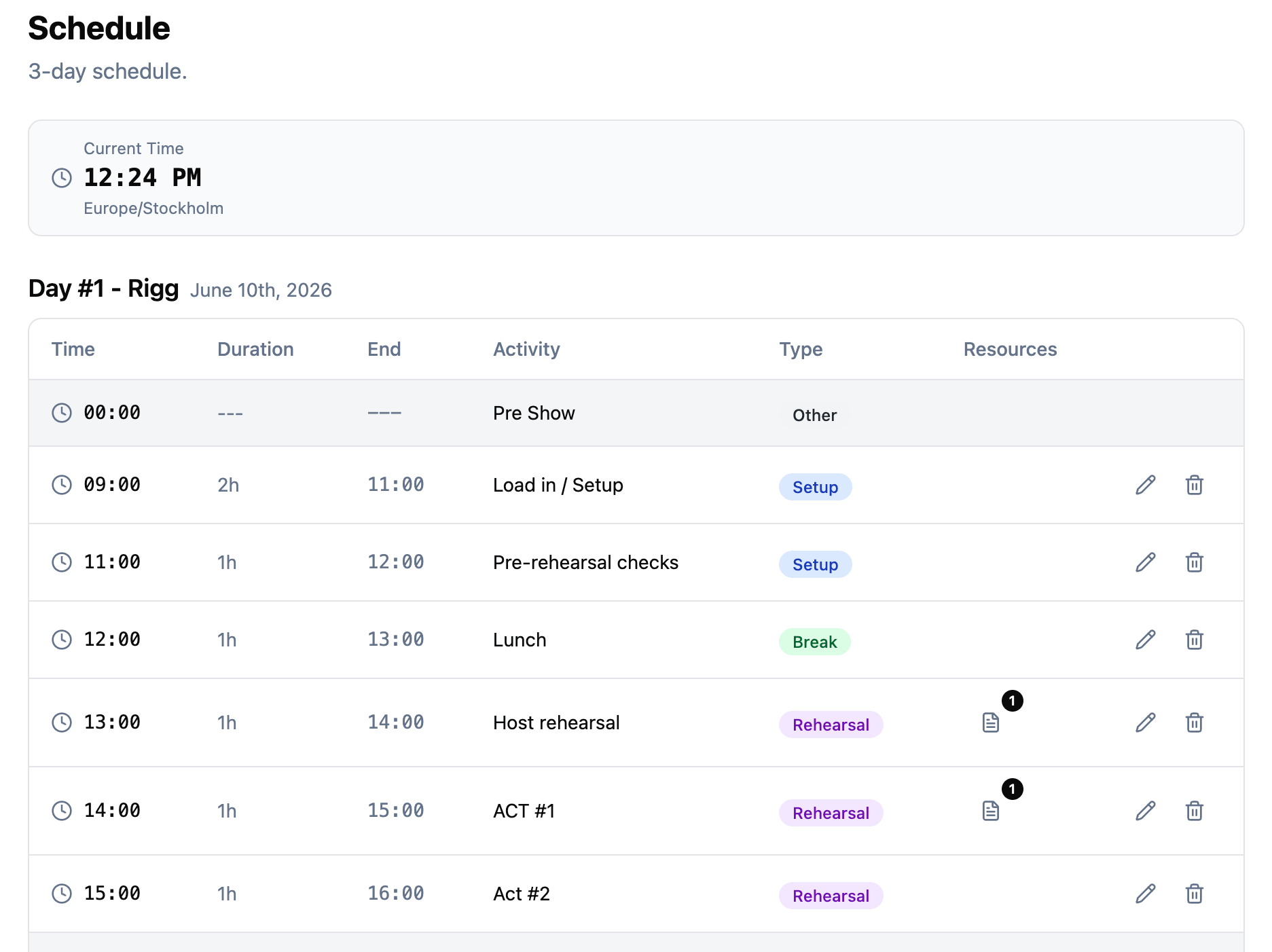 Figure: A shared production schedule everyone can see — load-in through strike, in one place.
Wrapping up
This timeline is a framework, not a rulebook. Every event is different, and experienced producers know when to compress timelines and when to allow extra lead time. The key principle: front-load your decisions. The earlier you lock things in, the less firefighting you do at the end.
Stay in the loop
Get product updates when new features ship. No spam, unsubscribe anytime.