June 29, 2026
Event Vendor Coordination: Managing Multiple Vendors Without the Chaos
Learn how to coordinate AV companies, caterers, decorators, and other vendors for events. Covers briefs, communication cadence, and day-of management.
By John Barker

A typical event production involves 10-30 different vendors: AV companies, caterers, decorators, furniture rental, security, cleaning, transportation, photographers, and more. Each has their own timeline, requirements, and communication preferences.
Managing this web of relationships is one of the most challenging — and least glamorous — parts of production management. This guide covers how to do it without losing your mind.
Building your vendor contact sheet
Before anything else, create a master contact list with:
- Company name
- Primary contact (name, phone, email)
- Backup contact (for day-of when the primary is unreachable)
- What they’re providing
- Contract status (confirmed, pending, invoiced)
- Load-in time and requirements
Store this in a shared location your team can access — not buried in one person’s inbox. A production planning tool with a team/contacts feature keeps this alongside your schedule and budget.
Writing effective vendor briefs
A good vendor brief prevents 90% of miscommunication. Include:
Event overview: What it is, who it’s for, tone/style, expected attendance.
Their specific scope: Exactly what you need from them (not what you need from all vendors — just their part).
Timeline: When they need to deliver/set up, how long they have, when they need to be complete.
Venue specifics: Load-in access, elevator availability, power locations, ceiling heights, any restrictions.
Contact: Who they should communicate with and who makes decisions.
Budget: If relevant, their budget allocation so they can design within constraints.
Send briefs early (4-6 weeks out for complex vendors, 2 weeks for simple ones) and ask for written confirmation that they’ve read and understood.
Communication cadence
Initial brief (4-6 weeks out)
Send the full vendor brief. Ask for confirmation and any questions.
Check-in (2-3 weeks out)
Verify everything is on track. Confirm delivery dates, quantities, and any custom elements.
Final confirmation (1 week out)
Lock in load-in times, parking instructions, venue contacts, and any last changes. This is the “no more changes” milestone.
Day-of coordination
Assign a specific team member as the vendor liaison. This person is the single point of contact for all vendor questions on site. They know the schedule, know the venue, and have authority to make decisions.

Day-of vendor management
Designate a vendor liaison
On event day, vendors shouldn’t be calling the production manager with questions like “where do I park?” or “which elevator to the ballroom?”. Assign a runner or coordinator as the vendor contact. They handle logistics so the production team focuses on the show.
Load-in sequencing
Not all vendors can arrive at once. Sequence load-in based on dependencies:
- Staging and rigging (needs empty room)
- Lighting and audio (needs staging in place)
- Video and screens (needs rigging complete)
- Decor and furniture (needs technical installation done)
- Catering (needs furniture set)
Build this sequence into your production schedule with specific time windows for each vendor. Share it in advance so they know exactly when to arrive.
Managing conflicts
Vendors will sometimes have conflicting needs (the decorator wants the stage clear; the AV team needs access to run cables). The production manager or venue liaison resolves these by referencing the schedule: “AV has the stage until 10am, decor starts at 10:15.”
A shared, real-time schedule eliminates the “I thought we had it until 11” conflicts. When everyone sees the same timeline, disputes resolve quickly.
Post-event vendor relationships
Debrief
After the event, note which vendors performed well and which didn’t. Did they arrive on time? Was the quality as expected? Were they easy to communicate with?
Timely payment
Pay invoices promptly. Vendors who get paid on time prioritize your next booking.
Feedback
If something didn’t meet expectations, give constructive feedback. Most vendors want to know so they can improve.
Long-term partnerships
Building relationships with reliable vendors pays dividends. A vendor you’ve worked with three times needs less briefing, fewer check-ins, and delivers more consistently than a new one.
Tools that help
Vendor coordination is fundamentally about shared information: who’s doing what, when, and where. Production planning tools like ProductionPlanner.io help by centralizing your schedule (with vendor-specific time blocks), team contacts, resource files (floor plans, tech riders, menus), and project details in one shared workspace that vendors can be invited to view.
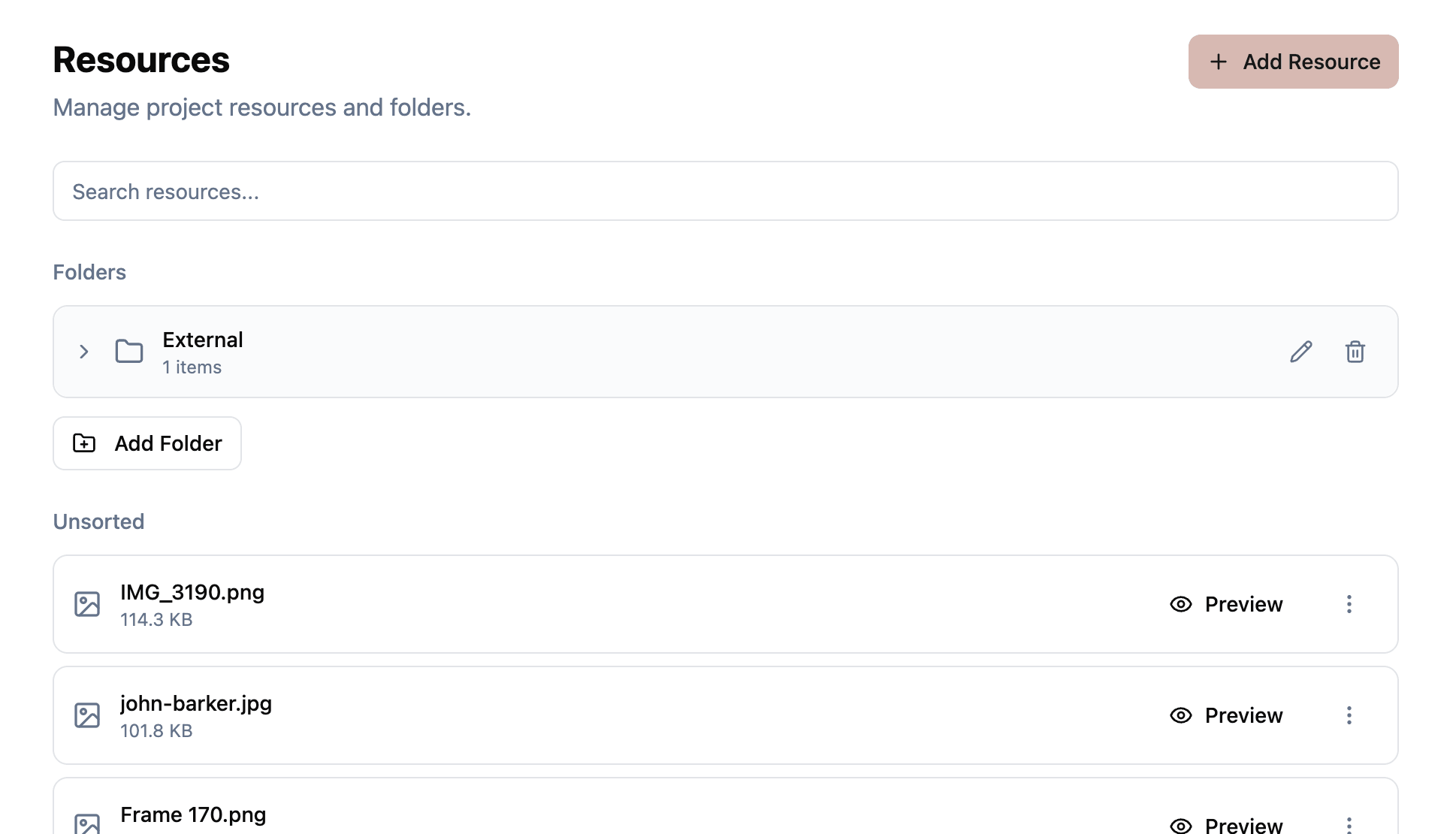 Figure: A shared resource library puts floor plans, tech riders, and vendor briefs in one place every vendor can find.
Wrapping up
Vendor coordination is a communication challenge more than a logistics challenge. Clear briefs, consistent check-ins, a sequenced load-in plan, and a designated day-of liaison solve most problems before they start. Invest the time in pre-production communication, and event day becomes about execution rather than coordination.
Stay in the loop
Get product updates when new features ship. No spam, unsubscribe anytime.